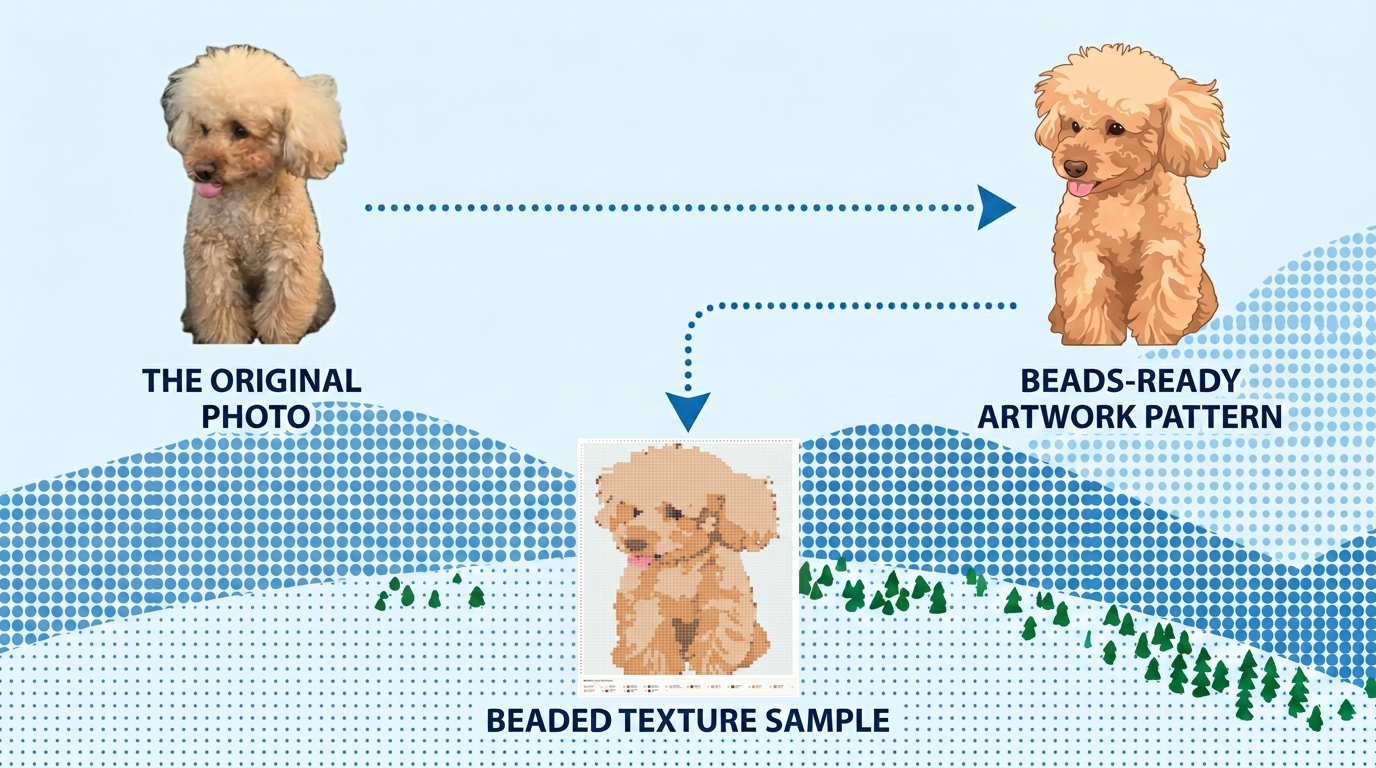
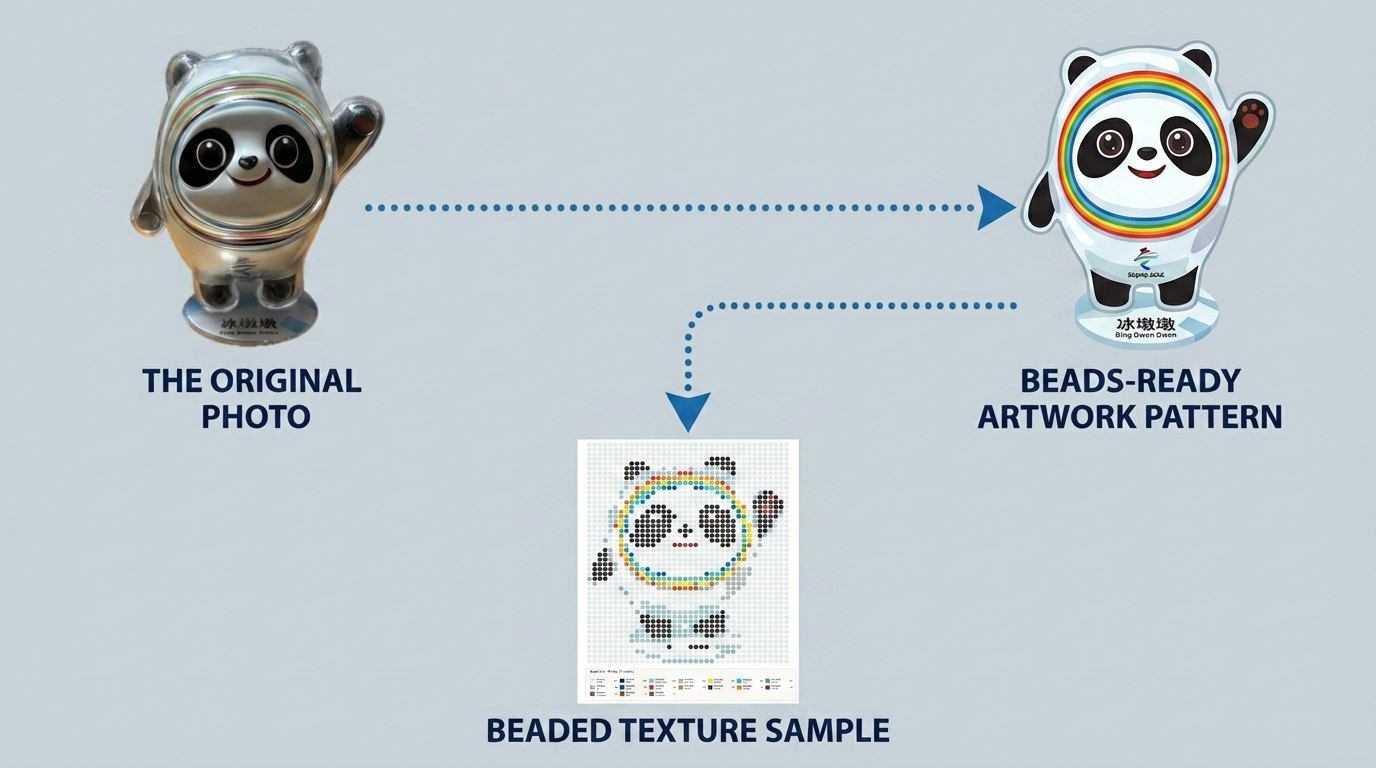
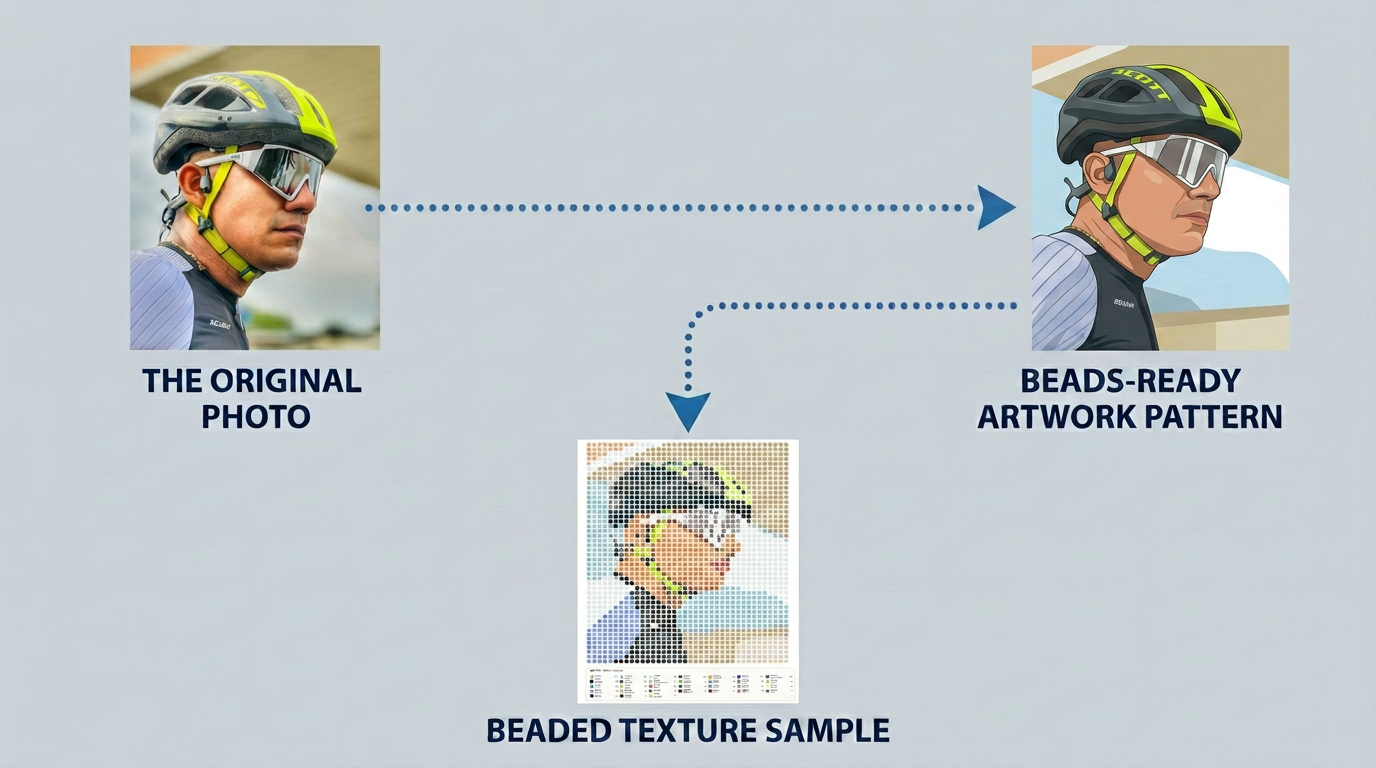
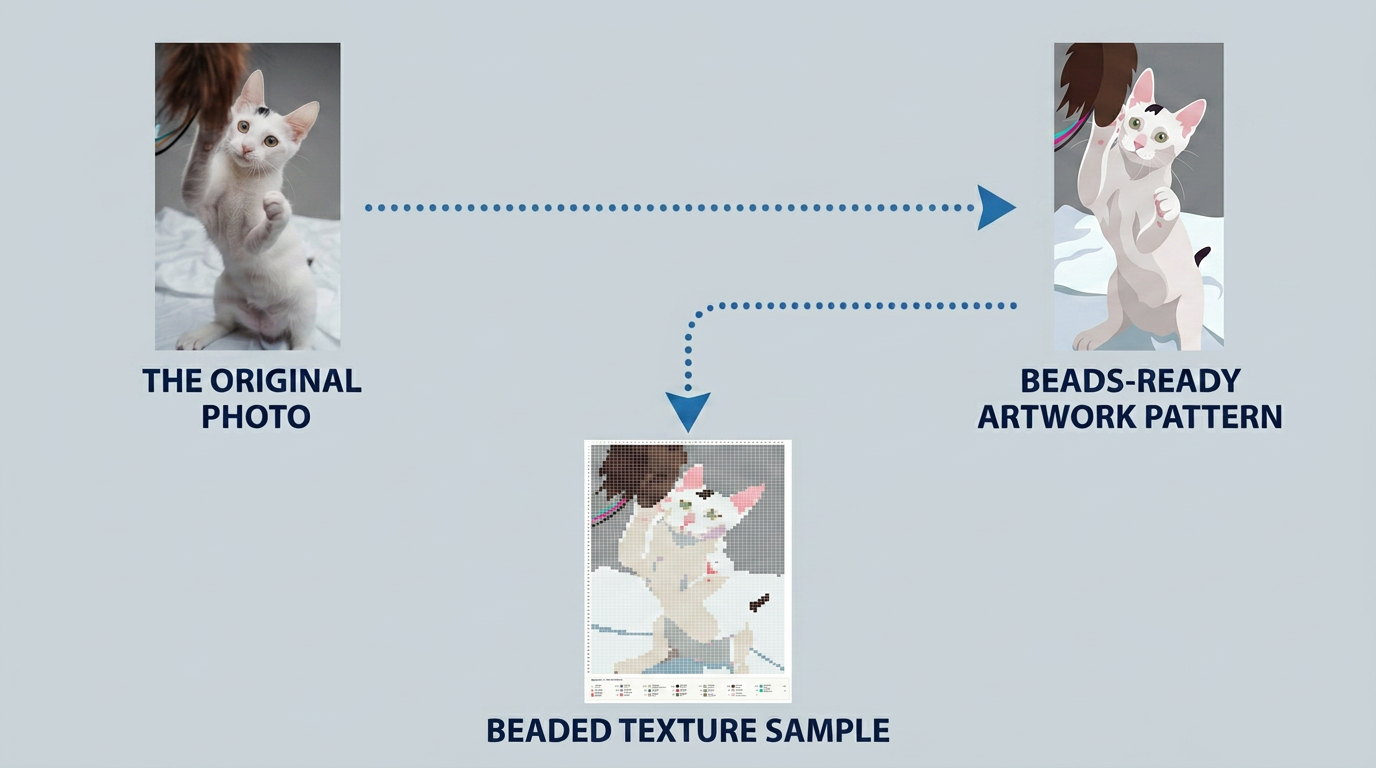
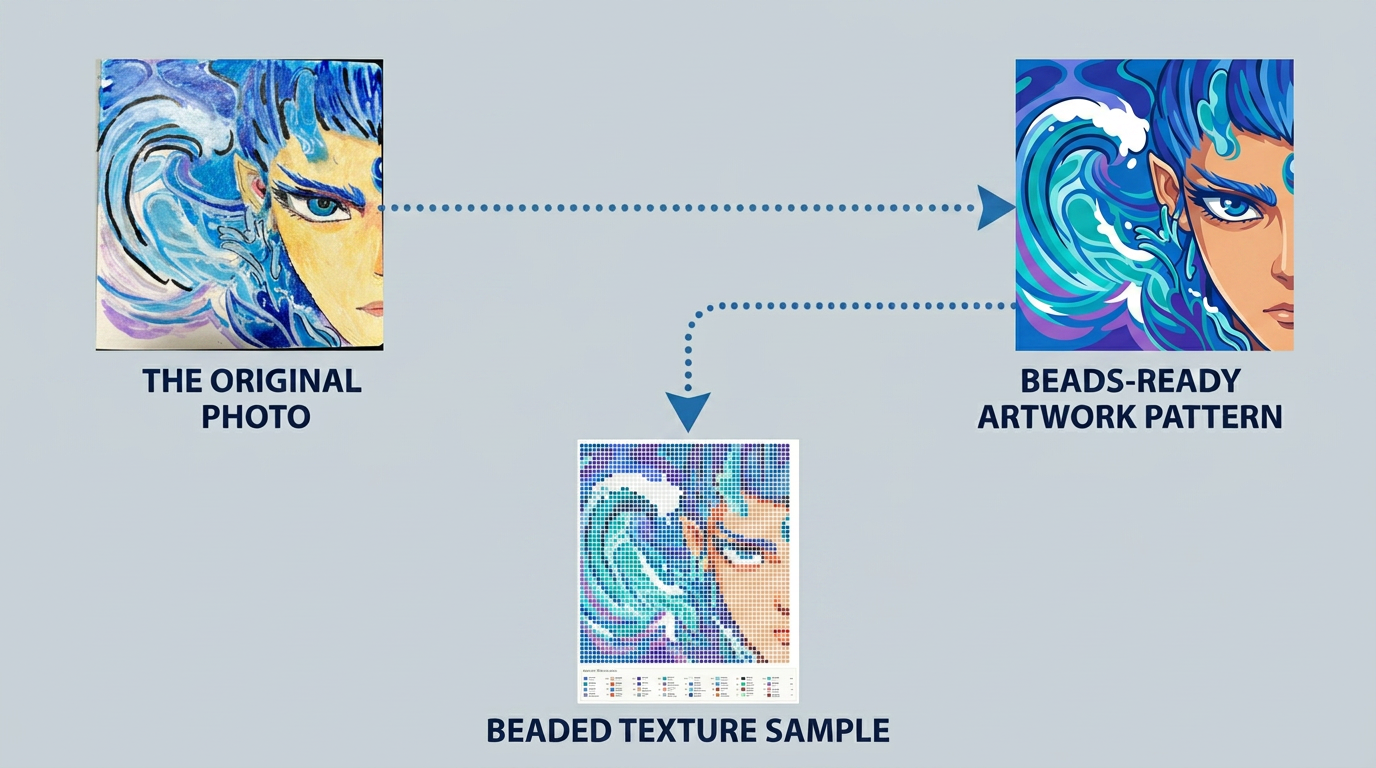
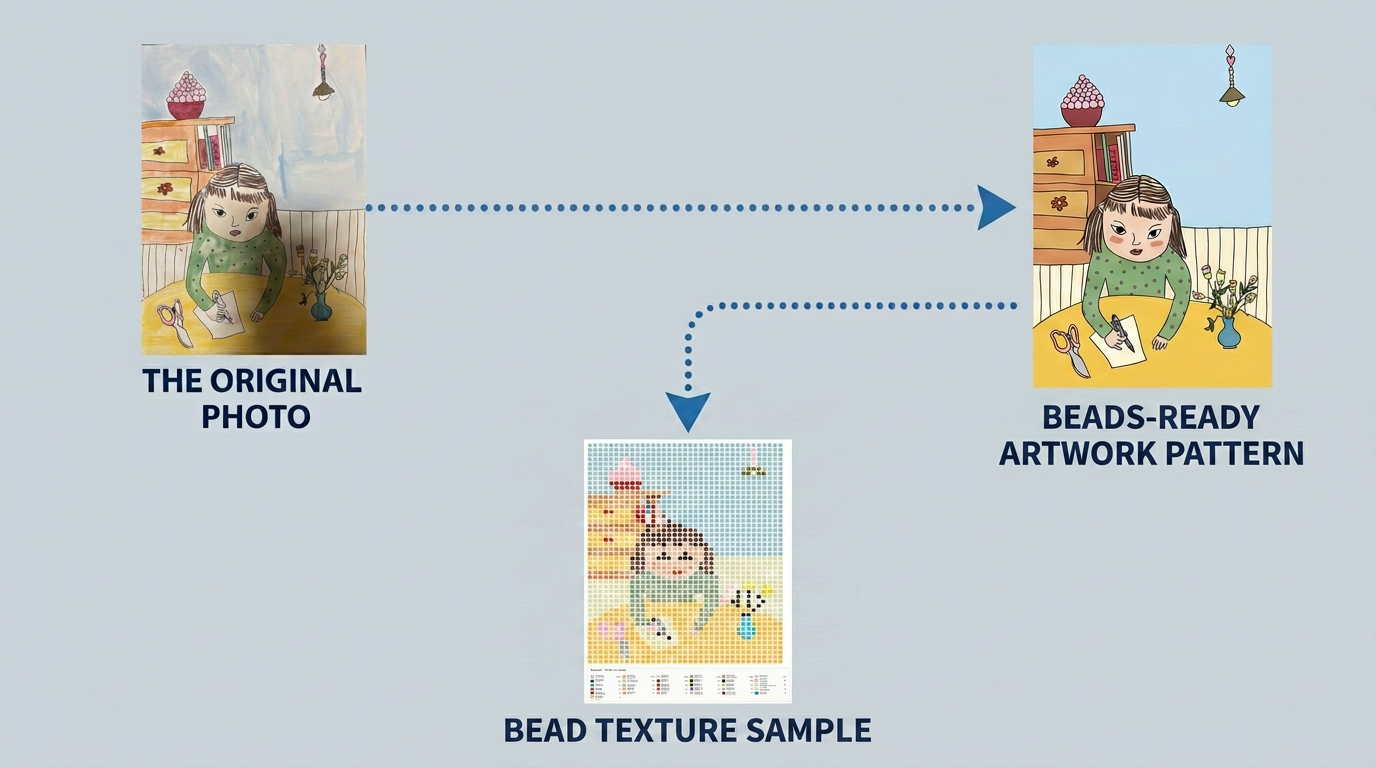
Transform the uploaded portrait or family photo into a polished, subject-focused flat-color cartoon portrait illustration.
Treat the person or people as the only important subject. Preserve each person's recognizable facial identity, expression, hairstyle, existing accessories, pose, clothing design, and overall body proportions. Keep faces clear, warm, expressive, and easy to recognize.
Strictly preserve the original colors of the people. Keep natural skin tones, hair colors, eye colors, clothing colors, and all existing accessories visually faithful to the original photo. Do not recolor people, change their color palette, alter skin tone, or change the overall color temperature of the subjects.
Convert the people into a refined 2D cartoon illustration using large, smooth, continuous, connected flat-color regions. Use clean, intentional edges. Simplify skin, hair, clothing, and shadows into broad, readable color shapes. Use only a limited, harmonious range of tones for each area: a base color, an optional shadow color, and an optional highlight color. Remove pores, freckles, moles, blemishes, tiny wrinkles, stray hairs, photographic grain, tiny highlights, and subtle texture.
Preserve each person's natural facial identity and original color relationships.
Analyze the face area for important low-contrast details that may become unclear after the illustration is reduced to a small bead-pattern grid. This includes the boundaries and shapes of the eyes, eyebrows, eyelashes, pupils, nose, nostrils, lips, teeth, facial contour, ears, hairline, bangs, and any facial accessories that are actually present in the original photo.
Where an important feature blends too closely into adjacent skin, hair, clothing, or the light gray background, improve readability by using a slightly darker and slightly more saturated version of that feature's original local color. Adjust only one or two tonal steps, staying within the same natural color family and preserving the original appearance.
Use subtle, smooth, continuous edges or outlines only where needed. Do not introduce new accessories, do not invent facial features, do not alter the person's identity, and do not change the original overall color palette. Do not apply harsh black outlines, excessive contrast, or thick cartoon lines unless they are clearly present in the source image.
Make facial details clear enough to remain recognizable after conversion to a 40 × 40 to 60 × 60 bead pattern, while keeping the portrait soft, natural, and color-faithful.
Completely remove and ignore the original background. Do not preserve background furniture, scenery, plants, walls, objects, text, other people, shadows, dark areas, or detailed environmental elements.
Replace the entire original background with one clean, uniform, solid light gray color, similar to #D9DCE2. The background must be completely flat and consistent from edge to edge, with no gradient, texture, pattern, shapes, shadows, or additional colors.
This is a clean source illustration for later conversion by a separate perler bead pattern generator. Do not create a finished bead pattern or pixel-art version.
Do not create perler beads, fuse beads, circular dots, dot patterns, mosaic, pixel art, pixelated edges, square pixels, visible grids, checkerboards, graph paper, halftone, stippling, dithering, scattered speckles, text, logos, watermarks, borders, or frames.
The final result must be a beautiful, color-faithful, subject-focused flat cartoon portrait on a uniform solid light gray background. Use large connected color blocks, clean readable facial details, subtle same-color-family contrast enhancement where needed, and preserve all original visible people, features, and accessories for reliable later conversion into a perler bead pattern.